Nessun risultato di contenuto corrisponde alla tua parola chiave.
Contenuto

Sei uscito con successo.


Non sei ancora registrato?
Prevenzione delle ulcere da pressione
Questa è la storia di Miguel Jopia Cuevas, un padre di famiglia di 60 anni del Cile, che aveva contratto il COVID-19. Dopo aver trascorso 39 giorni in ospedale, è stato dimesso con una grave ulcera da decubito lombosacrale.
Nel seguente video, Miguel rivela l'enorme impatto che l'ulcera da pressione ha avuto su tutti gli aspetti della sua vita: familiari, professionali e psicologici. Inoltre, racconta le sue sofferenze e gli elevati costi che deve sostenere per il trattamento dell'ulcera da pressione di terzo stadio da parte di un infermiere domiciliare.
Cliccando "Confirm" dichiari di essere un operatore sanitario.
Se sei un paziente o un giornalista visita le pagine a te dedicate.
Conferma Sì, sono un operatore sanitario. Cancella No, non sono un operatore sanitario.
Fino al
0%
delle ulcere da pressione nosocomiali è prevenibile. [1]
Le ulcere da pressione possono essere causate da una compromissione dell'apporto ematico alla cute o ai tessuti sottostanti. I fattori di rischio comprendono la limitazione della mobilità, le carenze nutrizionali e di umidità cutanea, la perfusione inadeguata e l'uso di dispositivi meccanici che esercitano pressione sulla cute. [2,3]
Le ulcere da pressione possono svilupparsi rapidamente, tra la prima ora e le 4-6 ore dopo un carico sostenuto.[3]
Nella maggior parte dei casi, le ulcere da decubito hanno un impatto significativo sulla morbilità del paziente e sulla sua qualità di vita e possono persino influire sulla sopravvivenza del paziente. [2]
Il costo del trattamento delle ulcere da decubito è 2,5 volte superiore rispetto alla prevenzione.[6]
Le linee guida sulla prevenzione e la gestione delle lesioni da pressione sono basate su una pratica clinica riconosciuta a livello internazionale. [7] Raccomanda un approccio olistico che integri un'alimentazione adatta, [8] il controllo della comorbidità [9], un'ottima idratazione [8] la gestione dell'umidità cutanea [10] e altri fattori.

Ad esempio, ogni volta che un paziente entra in un reparto, deve essere utilizzata una valutazione del rischio di ulcere da pressione, seguita da una regolare valutazione della cute per verificare la presenza di eventuali segni di lesioni. Inoltre, la nutrizione svolge un ruolo fondamentale nello stato di salute generale del paziente, influenzando la probabilità di sviluppare lesioni da pressione. È importante valutare i fabbisogni nutrizionali e adattare di conseguenza la dieta e garantire un'idratazione adeguata.

La nostra soluzione
B. Braun offre una gamma di medicazioni morbide, simili a cuscini, come Askina® DresSil e Askina® Foam, progettate per alleviare la pressione ed evitare l'attrito, da utilizzare assieme a prodotti adeguati per la gestione dell'umidità cutanea , come Askina® Barrier e Linovera®.
Linovera® è indicato per la prevenzione e il trattamento delle ulcere da pressione di 1° stadio. [13]
La formulazione è a base di acidi grassi iperossigenati, importanti acidi linoleici che possono contribuire ad una struttura cutanea sana. [15]
Tra gli altri ingredienti troviamo l'Aloe Vera che agisce come antiflogistico e idratante e la Centella Asiatica, agente tonico lenitivo per la cute. Linovera® protegge la cute, riducendo le forze da taglio e di attrito e mantiene la funzione di barriera idratante della cute. [13, 14]
I prodotti per la protezione della cute vengono utilizzati per ridurre il rischio di umidità eccessiva correlata ai traumi. È essenziale evitare una sovraesposizione della cute all'umidità e implementare strategie di prevenzione incentrate sul mantenimento dell'integrità cutanea. [16]
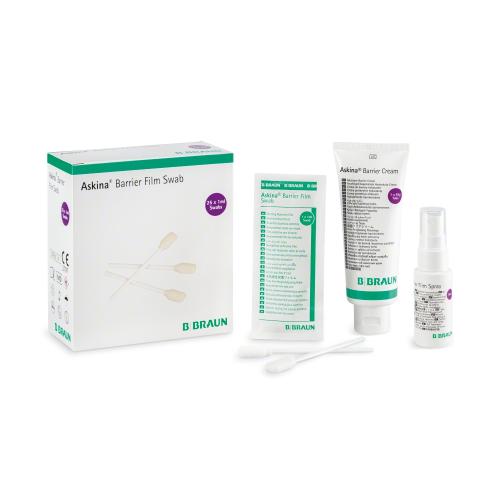
Askina® Barrier protegge la pelle dai liquidi corporei e fornisce una barriera duratura alla cute del paziente. Askina® Barrier Film Spray può essere applicato sulla cute intatta o lesa ed è particolarmente indicato per la protezione della cute perilesionale. [17]
Le aree come i talloni o l'osso sacro sono particolarmente esposte alla pressione e all'attrito. Di conseguenza, hanno bisogno di maggiore protezione. Oltre all'applicazione della barriera Askina® o Linovera® per la gestione dell'umidità, sono disponibili medicazioni idrocellulari anatomiche per alleviare la pressione.
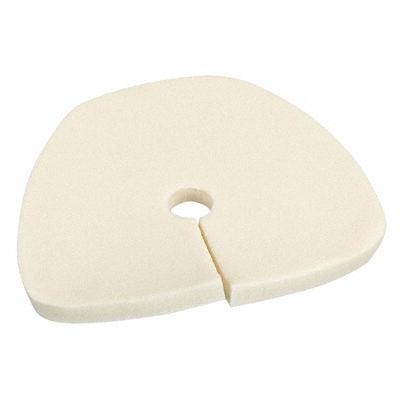
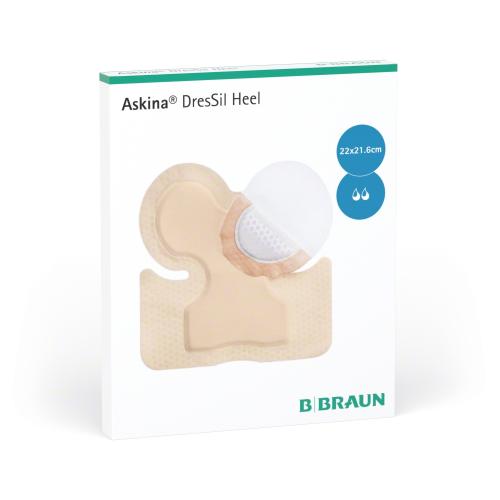
Askina® Heel, Askina® DresSil Heel e Askina® DresSil Sacrum sono prodotti per proteggere talloni, malleoli e sacro. [20,21,22]Askina® Trachea è una medicazione in schiuma appositamente progettata con un'apertura circolare che si adatta perfettamente attorno a una cannula trecheostomica o ad un altro drenaggio. [23]

Le protuberanze ossee non sono le uniche parti del corpo che possono essere esposte a pressione e attrito. Possono essere interessate anche altre parti a causa, per esempio, di dispositivi medici che esercitano pressione sulla cute. [2]
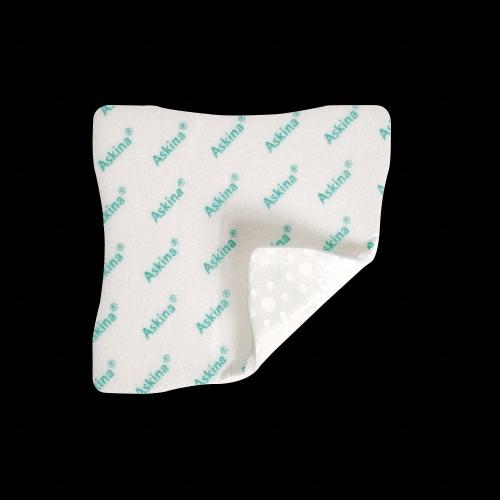
Askina® DresSil è una schiuma con adesivo in silicone che garantisce un'aderenza delicata e sicura e un basso trauma durante il cambio della medicazione. Può essere tagliata e sagomata per l'applicazione su aree più piccole che necessitano di protezione. [24]
Askina® DresSil Border è una medicazione in schiuma con adesivo in silicone e bordo adesivo aggiuntivo, realizzata per aree difficili da medicare o mobili (ginocchio, gomito, pieghe cutanee) in quanto è in grado di adattarsi ai vari contorni anatomici.
Ogni medicazione in schiuma può essere riposizionata durante l'applicazione o addirittura sollevata durante il tempo di applicazione per controllare la cute o la ferita. Possono anche essere applicati sulle ferite perché creano un ambiente umido che favorisce la guarigione naturale. [25]

Trattamento delle ulcere da pressione
Una volta sviluppata un'ulcera da decubito, è importante elaborare rapidamente un piano di cura coordinato per promuovere la guarigione. [26] Scopri di più su come l'infermiere di Miguel è riuscito a guarire la sua lesione.
Maggiori informazioni sul trattamento delle ulcere da pressione[1] Chaboyer W, Bucknall T, Webster J, McInnes E, Gillespie BM, Banks M, Whitty JA, Thalib L, Roberts S, Tallott M, Cullum N, Wallis M. The effect of a patient centred care bundle intervention on pressure ulcer incidence (INTACT): A cluster randomised trial. Int J Nurs Stud. 2016 Dec;64:63-71. doi: 10.1016/j.ijnurstu.2016.09.015. Epub 2016 Sep 23
[2] Labeau SO, Afonso E, Benbenishty J, Blackwood B, Boulanger C, Brett SJ, Calvino-Gunther S, Chaboyer W, Coyer F, Deschepper M, François G, Honore PM, Jankovic R, Khanna AK, Llaurado-Serra M, Lin F, Rose L, Rubulotta F, Saager L, Williams G, Blot SI; DecubICUs Study Team; European Society of Intensive Care Medicine (ESICM) Trials Group Collaborators. Prevalence, associated factors and outcomes of pressure injuries in adult intensive care unit patients: the DecubICUs study. Intensive Care Med. 2021 Feb;47(2):160-169. doi: 10.1007/s00134-020-06234-9. Epub 2020 Oct 9. Erratum in: Intensive Care Med. 2021 Apr;47(4):503-520. PMID: 33034686; PMCID: PMC7880913.
[3] Gefen A. How much time does it take to get a pressure ulcer? Integrated evidence from human, animal, and in vitro studies. Ostomy Wound Manage. 2008 Oct;54(10):26-8, 30-5. PMID: 18927481.
[4] Graves N, Birrell F, Whitby M. Effect of pressure ulcers on length of hospital stay. Infect Control Hosp Epidemiol. 2005 Mar;26(3):293-7. doi: 10.1086/502542. PMID: 15796283.
[5] Sebba Tosta de Souza DM, Veiga DF, Santos ID, Abla LE, Juliano Y, Ferreira LM. Health-Related Quality of Life in Elderly Patients With Pressure Ulcers in Different Care Settings. J Wound Ostomy Continence Nurs. 2015 Jul-Aug;42(4):352-9. doi: 10.1097/WON.0000000000000142. PMID: 26135820.
[6] Demarré L, Van Lancker A, Van Hecke A, Verhaeghe S, Grypdonck M, Lemey J, Annemans L, Beeckman D. The cost of prevention and treatment of pressure ulcers: A systematic review. Int J Nurs Stud. 2015 Nov;52(11):1754-74. doi: 10.1016/j.ijnurstu.2015.06.006. Epub 2015 Jun 25. PMID: 26231383.
[7] European Pressure Ulcer Advisory Panel, National Pressure Injury Advisory Panel, and Pan Pacific Pressure Injury Alliance. Prevention and Treatment of Pressure Ulcers/Injuries: Clinical Practice Guideline. The International Guideline. 3rd ed. Haesler E, ed. 2019. http://internationalguideline.com. Last accessed December 27, 2019.
[8] Munoz N, Posthauer ME, Cereda E, Schols JMGA, Haesler E. The Role of Nutrition for Pressure Injury Prevention and Healing: The 2019 International Clinical Practice Guideline Recommendations. Adv Skin Wound Care. 2020 Mar;33(3):123-136. doi: 10.1097/01.ASW.0000653144.90739.ad. PMID: 32058438.
[9] Jaul E, Barron J, Rosenzweig JP, Menczel J. An overview of co-morbidities and the development of pressure ulcers among older adults. BMC Geriatr. 2018 Dec 11;18(1):305. doi: 10.1186/s12877-018-0997-7. PMID: 30537947; PMCID: PMC6290523.
[10] Yusuf S, Okuwa M, Shigeta Y, Dai M, Iuchi T, Rahman S, Usman A, Kasim S, Sugama J, Nakatani T, Sanada H. Microclimate and development of pressure ulcers and superficial skin changes. Int Wound J. 2015 Feb;12(1):40-6. doi: 10.1111/iwj.12048. Epub 2013 Mar 12. PMID: 23490303; PMCID: PMC7950852
[11] Gerhardt LC, Strässle V, Lenz A, Spencer ND, Derler S. Influence of epidermal hydration on the friction of human skin against textiles. J R Soc Interface. 2008 Nov 6;5(28):1317-28. doi: 10.1098/rsif.2008.0034. PMID: 18331977; PMCID: PMC2607440.
[12] Lavallée JF, Gray TA, Dumville J, Cullum N. Preventing pressure ulcers in nursing homes using a care bundle: A feasibility study. Health Soc Care Community. 2019 Jul;27(4):e417-e427. doi: 10.1111/hsc.12742. Epub 2019 Mar 27. PMID: 30919525; PMCID: PMC6618244
[13] see current IFU Linovera®
[14] see current IFU Linovera® Emulsion
[15] Otero DP, Domínguez DV, Fernández LH, Magariño AS, González VJ, Montesinos JV. Preventing facial pressure ulcers in patients under non-invasive mechanical ventilation: a randomised control trial. J Wund Care. 2017 Mar 2;26(3):128-136. doi: 10.12968/jowc.2017.26.3.128. PMID: 20277990.
[16] Fletcher J, Beeckman D, Boyles A et al (2020) International Best Practice Recommendations: Prevention and management of moisture-associated skin damage (MASD). Wounds International. Available online at www.woundsinternational.com. Accessed July 3, 2023.
[17] see current IFU Askina® Barrier Cream
[18] see current IFU Askina® Barrier Film Spray
[19] see current IFU Askina® Barrier Film Swabs
[20] see current IFU Askina® Heel
[21] see current IFU Askina® DresSil Heel
[22] see current IFU Askina® DresSil Sacrum
[23] see current IFU Askina® Trachea
[24] see current IFU Askina® DresSil
[25] see current IFU Askina® DresSil Border
[26] Stolt M, Hjerppe A, Hietanen H, Puukka P, Haavisto E. Local treatment of pressure ulcers in long-term care: a correlational cross-sectional study. J Wound Care. 2019 Jun 2;28(6):409-415. doi: 10.12968/jowc.2019.28.6.409. PMID: 31166863