Sei uscito con successo.

Ciao !
Logout

La stabilità inizia dalla superficie

AESCULAP PLASMAPOREXP®
Rivestimento che migliora le superfici 

Dispositivi avanzati per la fusione intersomatica, caratterizzati da rivestimento in titanio poroso e nucleo in PEEK. Una combinazione ottimale di proprietà osteoconduttive e caratteristiche biomimetiche, progettata per l’integrazione ossea.. La scelta degli esperti.

Sei un operatore sanitario?

Cliccando "Confirm" dichiari di essere un operatore sanitario.


Se sei un paziente o un giornalista visita le pagine a te dedicate.

Conferma Sì, sono un operatore sanitario. Cancella No, non sono un operatore sanitario.
  • La struttura osteoconduttiva offre

    0%

    migliori prestazioni in apposizione* [1,2,4]

  • La struttura del rivestimento finemente bilanciata garantisce

    0%

    maggiore resistenza alla delaminazione** [3]

  • Robuste ed elastiche allo stesso tempo: le gabbie rivestite in XP sono

    0%

    più vicino al modulo elastico dell'osso corticale.***°[2,5,6]

Varietà di impianti

Ampia gamma di dispositivi per fusione intersomatica, comprese opzioni autonome

Visibilità radiografica

Consente una chiara visualizzazione dei contorni dell’impianto, mentre la natura radiotrasparente del PEEK permette una buona visibilità ai raggi X e alle scansioni TC.

Rivestimento PLASMAPORE

La superficie porosa in titanio crea un contatto tra superficie e osso, favorendo la osteointegrazione.[1,4]

Ampia finestra di innesto

Tutti gli impianti possono essere riempiti con osso o sostituto osseo per ottenere risultati di fusione ottimali.

Design a vite divergente

Il design divergente delle viti contribuisce alla stabilità dell'impianto.

Perni marcatori

I perni radiografici facilitano il posizionamento e la localizzazione dell'impianto.

3D model of the letters x and p with plasmapore xp coating, are shown fused to bone tissue, symbolizing an implant designed for enhanced osseointegration for secondary stability.
3D model of the letters x and p with plasmapore xp coating, standing upright on a steep surface without slipping, symbolizing the implant’s high initial stability.
3D model of the letters x and p with plasmapore xp coating, slightly compressed from above and below, demonstrating elastic deformation that reflects the implant’s bone-like flexibility and resistance.
3D model of the letters x and p with plasmapore xp coating, shown as transparent with only the edges visible, illustrating a radiolucent core that enhances imaging clarity and implant contour visibility in CT and MRI scans

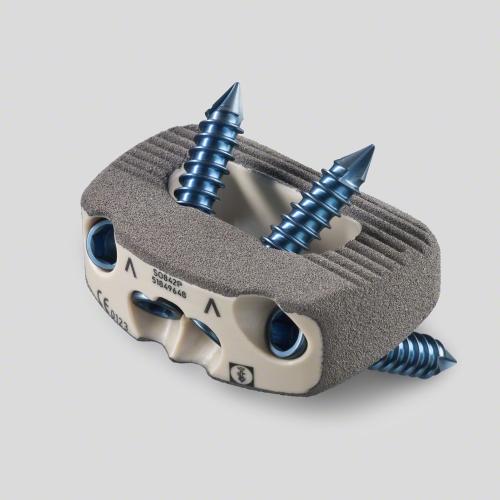
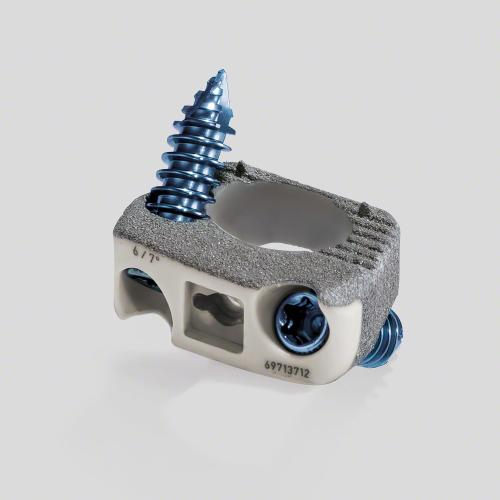
ArcadiusXP C®

ArcadiusXP C® is our solution designed for single and multilevel stand-alone ACDF procedures.The intrinsic design does not add profile to the anterior border of the vertebral body, limiting risk of damage to adjacent soft tissue and blood vessels.The ArcadiusXP C® Spinal System is intended to be used as an interbody fusion cage as a stand-alone system with two bone screws. It is inserted between the vertebral bodies into the disc space from C2-C3 to C7-T1 in skeletally mature patients.Features:Cage InformationManufactured with a radiolucent PEEK-OPTIMA® core and an osteoconductive PLASMAPOREXP® surface.A wide range of implant sizes is designed to accommodate different patient anatomies:Two implant footprints: 13 mm x 16 mm, 15 mm x 17 mmSeven heights: 5 mm, 6 mm, 7 mm, 8 mm, 9 mm, 10 mm, 11 mmTwo lordotic angles: 4°, 7°Wide central opening for packing of bone materialSurface texturing for additional stabilityTwo titanium markers for X-ray verification Screw and Construct InformationManufactured from titanium alloyScrews are self-tappingScrew diameter is 4mm Available in three lengths: 14 mm, 16 mm and 18mmConstruct information:Diverging screw design35° cranial-caudal orientationDual locking mechanism

ArcadiusXP L®

The ArcadiusXP L® Interbody Fusion System is a stand-alone device intended to be used with four bone screws if no supplement fixation is used to stabilize the lumbar spine through an anterior approach.ArcadiusXP L® combines high primary and secondary stability [1, 2] and improved imaging properties [3]. PLASMAPOREXP® osteoconductive coating was developed to promote implant stability and bony ingrowth [1, 2].Implant design and flexible instrumentation allow an accessibility from a wide range of angles for instrumentation and hence provide ease in screw insertion. System FeaturesPLASMAPOREXP® coatingWide variety of implant optionsGenerous graft windowSurface texturingFive X-Ray marker pinsMidline accessibility for screw insertionDiverging screw designDual locking mechanismSelf-centering, self-drilling and self-tapping bone screwsComprehensive array of instrumentation Implant DesignBuilt on experienceAesculap has many years of experience in applying PLASMAPORE® coatings to titanium orthopaedic and spine implants [4-6] to develop the PLASMAPOREXP® coating for PEEK spinal implants.Innovative surface enhancing technologyPLASMAPOREXP® is an osteoconductive pure titanium coating (Ti/ISO 5832-2) which enables bone ingrowth due to its balanced relation between pore depth, porosity and roughness [1].Enhanced stabilityThe benefits of PLASMAPOREXP® in combination with the diverging screw design contribute to the implant stability [2, 7].Implant fitWide variety of implant sizes are designed to fit with varying patient anatomies.Accessibility from diverse anglesImplant design and flexible instrumentation allow an accessibility from a wide range of angels for instrumentation and hence provide ease in screw insertion.Simple locking mechanismIntegrated dual locking mechanism with single-step activation.Excellent imaging propertiesThe PLASMAPOREXP® coating together with the X-ray marker pins allow the visualization of implant contour and localization [3]. Intended UseThe ArcadiusXP L® Interbody Fusion System is a stand-alone device intended to be used with four bone screws if no supplement fixation is used to stabilize the lumbar spine through an anterior approach. The system contains:Cages in different heights, angles and footprintsBone screws in different lengthsLevels of anterior lumbar interbody fusion for the indications listed in the instructions for use are from L2-S1. NoteFor further information please see instructions for use TA-No. 015555.

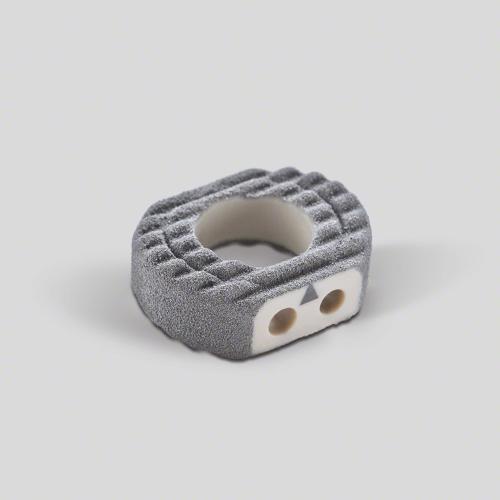
CeSPACE® XP

The CeSPACE® XP Interbody Fusion System brings an innovative surface enhancing technology, PLASMAPOREXP®, to ACDF procedures. The combination of a PEEK-OPTIMA® core with the osteoconductive PLASMAPOREXP® coating delivers several material advantages. PEEK-OPTIMA® properties include radiolucency, high mechanical strength, high fatigue resistance, a low wear factor and biocompatibility. The core is mantled with the proven PLASMAPOREXP® coating to increase the contact area between implant and endplate. PLASMAPOREXP® is an osteoconductive pure titanium coating (Ti/ISO 5832-2) which enables bone ingrowth due to its balanced relationship between pore depth, porosity and roughness. PLASMAPOREXP® allows for clear visualization of implant contours under X-ray and allows for assessment of the bone structure and progress towards bone fusion. Combined with specifically designed and clearly arranged instruments, CeSPACE® is the solution for anterior cervical interbody fusion.Features:PlasmaporeXP® osteoconductive porous Titanium coating over PEEK-OPTIMA® corePlasmaporeXP® delineates the contours of the implant under X-ray to allow for excellent visualization during insertion Titanium pins serve as location markers - Anatomical shape and serrated profile

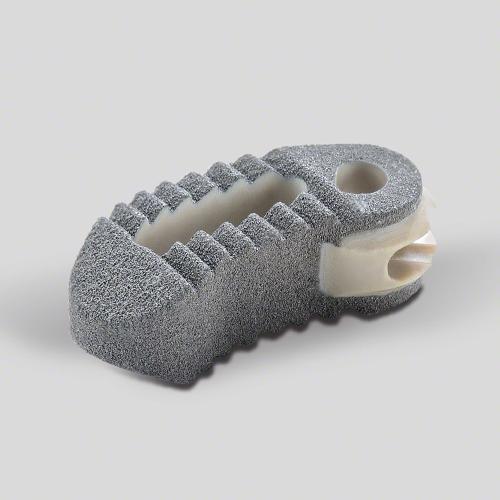
TSPACE®XP

The high incidence of spinal disorders and consecutive symptoms call for optimized diagnostics and therapies. Minimally invasive surgical procedures are of particular interest. Minimally invasive spine surgery relies on various retractor systems to create small ventral and dorsal access channels to the spine. At the same time innovative implants reducing tissue trauma and new percutaneous surgical techniques are growing in popularity. Accordingly, the S4® Element System, the Spine Classics retractor system and the TSPACE®XP interbody for intercorporal fusion form a sophisticated treatment concept. In this way, minimally invasive mono- and bisegmental fusion surgeries at the lumbar spine can be successfully performed. The TSPACE®XP system provides an intuitive and easy-handling inserter which allows straightforward insertion of the implants. The bulleted nose has been taken over from the PEEK version to facilitate the implantation of the cage especially in very degenerated discs.Features:Material of the implant: PEEK-OPTIMA coated with Aesculap®XP Porosity of up to 60 % creates an optimal surface-to-bone contactImproved visibility during imaging through Aesculap®XP and tantalum marker pins – Avoids artifacts under CT and MRI control Enhanced implant stability provided by the roughened surface Bullet nose for easier implantation especially in very degenerated discs New articulating interbody inserter for intuitive and easy interbody positioningSystem components: Lengths: 26, 30, 34 mm Heights: 7-13 mm in 1 mm increments, 15 mm, 17 mm Width: 11.5 mm Angle: 5°

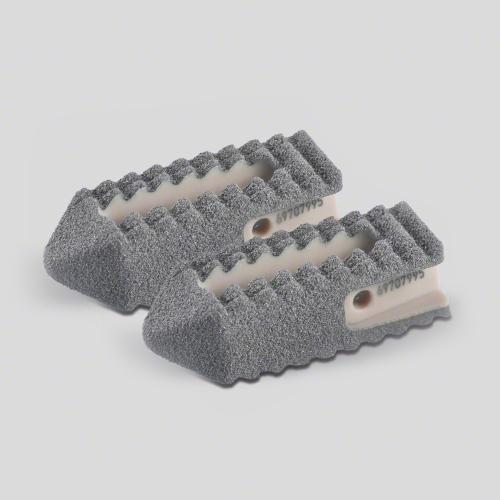
PROSPACE® XP

The PROSPACE® XP implant is used for posterior lumbar interbody fusion. The design of the PROSPACE® XP implant allows an enhanced contact area between implant and vertebral endplate.Indication:Degenerative instabilitySpondylolisthesisPost-discectomy syndromePost-traumatic instabilitiesFeatures:Combines aPEEK-OPTIMA® implant core with a porous titanium coatingPorosity of up to 60 % creates an optimal surface-to-bone contactAllows a greater surface area of the implant to be in direct contact with boneOffers an enhanced foundation for the ingrowth of boneImproved visibility during imaging through Aesculap® XP coating and titanium marker pinsEnhanced implant stability provided by the roughened surfaceAvoids artifacts under CT and MRI controlBulleted nose for easier implantation especially in strongly degenerated discsSystem components:Length: 22 und 26 mmHeight: 7-13 mm in 1 mm incrementsAngle: 0°, 5°, 8°Reduced and clearly arranged instruments

THI Total Healthcare Innovation S.r.l.


Per i prodotti di Chirurgia Spinale, il distributore autorizzato per Italia, San Marino e Città del Vaticano è THI Total Healthcare Innovation S.r.l. Clicca per ulteriori informazioni.

Clicca qui

Riferimenti

* rispetto ai dispositivi intersomatici non rivestiti, dopo 24 settimane dall’impianto

**rispetto ai requisiti raccomandati dall’industria

*** rispetto ai dispositivi intersomatici in lega di titanio solido.
 

  1. Cheng B, Boyle C. Biomechanical Pullout Strength and Histology of Plasmapore® XP Coated Implants: Ovine Multi Time Point Survival Study. 2014.
  2. Chen Y, Wang X, Lu X, Yang L, Yang H, Yuan W, Chen D. Comparison of titanium and polyetheretherketone (PEEK) cages in the surgical treatment of multilevel cervical spondylotic myelopathy: a prospective, randomized, control study with over 7-year follow-up. Eur Spine J. 2013 Jul;22(7):1539-46. doi: 10.1007/s00586-013-2772-y. Epub 2013 Apr 9. PMID: 23568254; PMCID:PMC3698331.
  3. Ateschrang A, Weise K, Weller S, Stöckle U, de Zwart P, Ochs BG. Long-term results using the straight tapered femoral cement-less hip stem in total hip arthroplasty: a minimum of twenty-year follow-up. J Arthroplasty. 2014 Aug;29(8):1559-65. doi: 10.1016/j.arth.2014.02.015. Epub 2014 Feb 13. PMID: 24656056.
  4. Klawitter JJ, Bagwell JG, Weinstein AM, Sauer BW. An evaluation of bone growth into porous high density polyethylene. J Bio-med Mater Res. 1976 Mar;10(2):311-23. doi: 10.1002/jbm.820100212. PMID: 1254618.
  5. Kuhn JL, Goldstein SA, Choi K, London M, Feldkamp LA, Matthews LS. Comparison of the trabecular and cortical tissue moduli from human iliac crests. J Orthop Res. 1989;7(6):876-84. doi: 10.1002/jor.1100070614. PMID: 2795328.
  6. Ratner, B. D., Hoffman, A. S., Schoen, F. J., Lemons, J. E., Wagner, W. R., Sakiyama-Elbert, S. E., Zhang, G., & Yaszemski, M. J. (2020). Introduction to Biomaterials Science: An Evolving, Multidisciplinary Endeavor. In Biomaterials Science: An Introduction to Materials in Medicine (pp. 3-19). Elsevier. https://doi.org/10.1016/B978-0-12-816137-1.00001-5